The Power of a Personalised Program (and Why It’s More Than Sets, Reps, and Percentages)
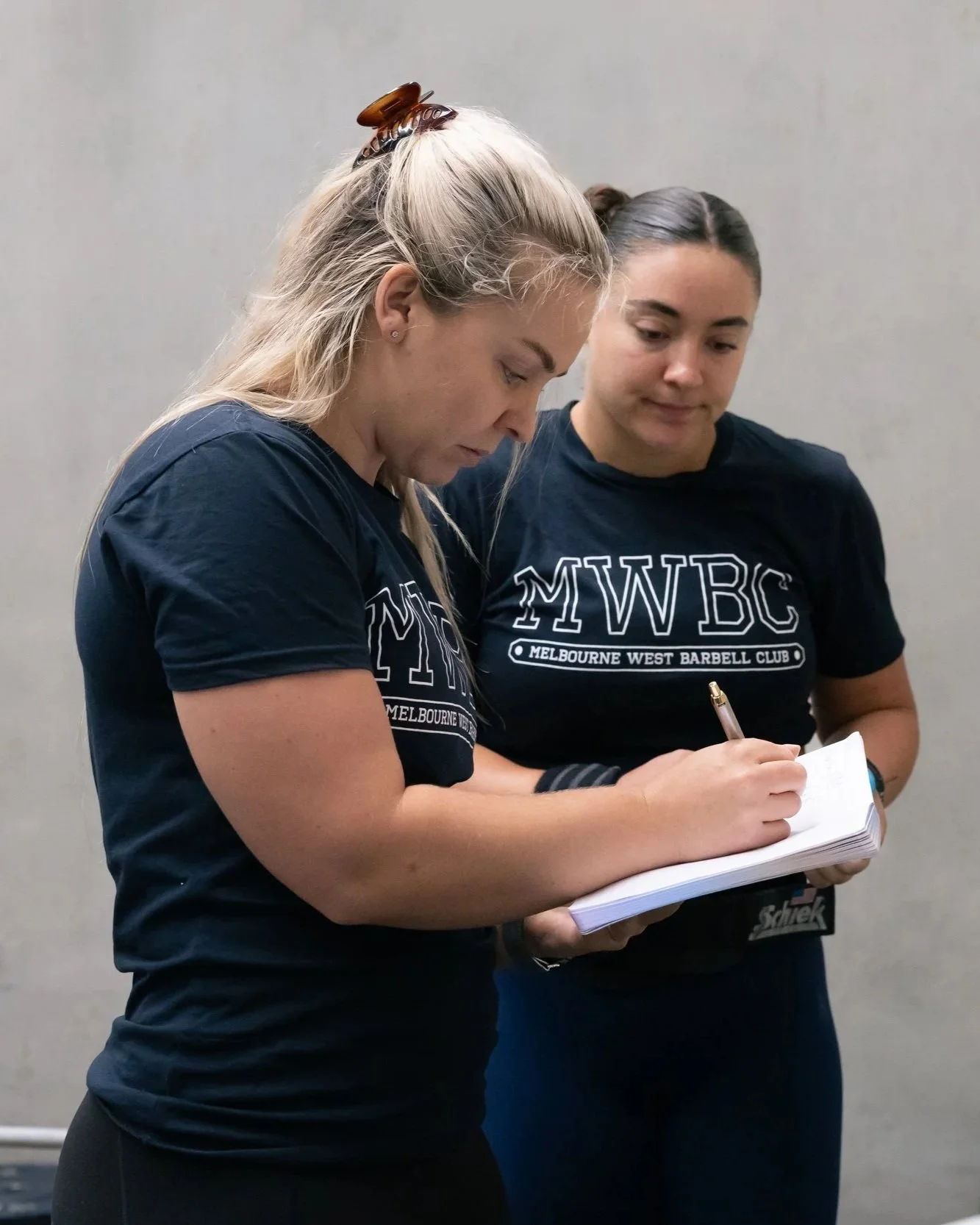
When people hear the phrase personalised programming, they often picture spreadsheets.
Different percentages.
Different rep schemes.
Different exercises swapped in and out.
That’s part of it, but it’s also the smallest piece of the puzzle.
At Melbourne West Barbell Club, personalised programming isn’t about novelty or complexity. It’s about alignment. It’s about ensuring the work you’re doing actually matches who you are, where you’re at, and what you’re trying to build right now.
Because two lifters can run the exact same numbers and get wildly different outcomes.
Percentages don’t create progress. Context does.
Percentages tell us how heavy something is relative to a max.
They don’t tell us how someone moves.
They don’t tell us what someone understands.
They don’t tell us what someone is afraid of, overthinking, or avoiding.
A personalised program considers:
How a lifter responds to load
How much complexity they can manage
How confident they feel under the bar
What tends to break down first when pressure increases
Those factors influence how something is trained far more than the number written next to it.
Exercise selection is about intention, not variety.
At MWBC, we don’t rotate exercises just to keep things interesting. Every exercise exists for a reason.
We’re asking:
What quality are we building here?
What problem is this solving?
What should the lifter be feeling?
What does success look like in this movement today?
Two lifters might both be squatting, but one might be developing positional confidence while another is learning to build their leg drive out of the hole. The barbell looks the same. The intention isn’t.
When athletes understand why an exercise is in their program, they stop guessing. That’s when learning compounds.
Focus and guardrails matter more than cues.
One of the biggest mistakes we see is lifters trying to focus on everything at once.
A personalised program gives guardrails:
What matters today
What can be ignored for now
Where attention should go
What success actually looks like in this session
Without those guardrails, well-meaning athletes fill the gaps themselves. They chase cues, change focus every set, and leave sessions unsure whether they did the right thing.
Coaching is the process of narrowing focus, not adding more noise.
Load management is individual, not theoretical.
Progress isn’t just about how much you lift. It’s about how often you can train well.
Our coaches adjust:
Weekly exposure to intensity
Total volume tolerance
Technical demand across sessions
How much fatigue a lifter carries week to week
Two athletes with the same strength level might need very different approaches to stay progressing instead of stalling.
Personalisation means knowing when to push, when to consolidate, and when to let something settle before progressing again.
Confidence is trainable and it belongs in the program.
Confidence doesn’t magically appear once someone is “strong enough”.
It’s built deliberately through:
Repeatable setups
Predictable sessions
Clear expectations
Feedback that makes sense
A personalised program considers how safe a lifter feels taking attempts, missing lifts, or being watched. That’s especially important for beginners or anyone returning from time away.
When confidence grows, strength follows.
Personalised programming is a coaching relationship, not a document.
The real power of a personalised program is that it evolves.
It changes based on:
How the lifter feels
How they interpret the work
How they respond to feedback
What’s showing up consistently
The program is a living thing. The coaching conversation around it is what drives results.
That’s why at MWBC, individualised programming exists inside a coached, team environment. Lifters get clarity, structure, and support, without being left to figure things out alone.
The Key Takeaway
Personalised programming isn’t about having something different for the sake of it.
It’s about:
Understanding the point of the exercises written
Training with intention
Building confidence alongside strength
Progressing in a way that actually sticks
That’s what our coaches are doing behind the scenes every day. Not just writing programs but shaping environments where lifters can learn, adapt, and move forward with clarity.
If you’re curious about what that looks like in practice, we’re currently offering free 1:1 intro sessions. It’s a chance to talk through your training, your goals, and whether this model is the right fit.
—MWBC Coaching Team
