
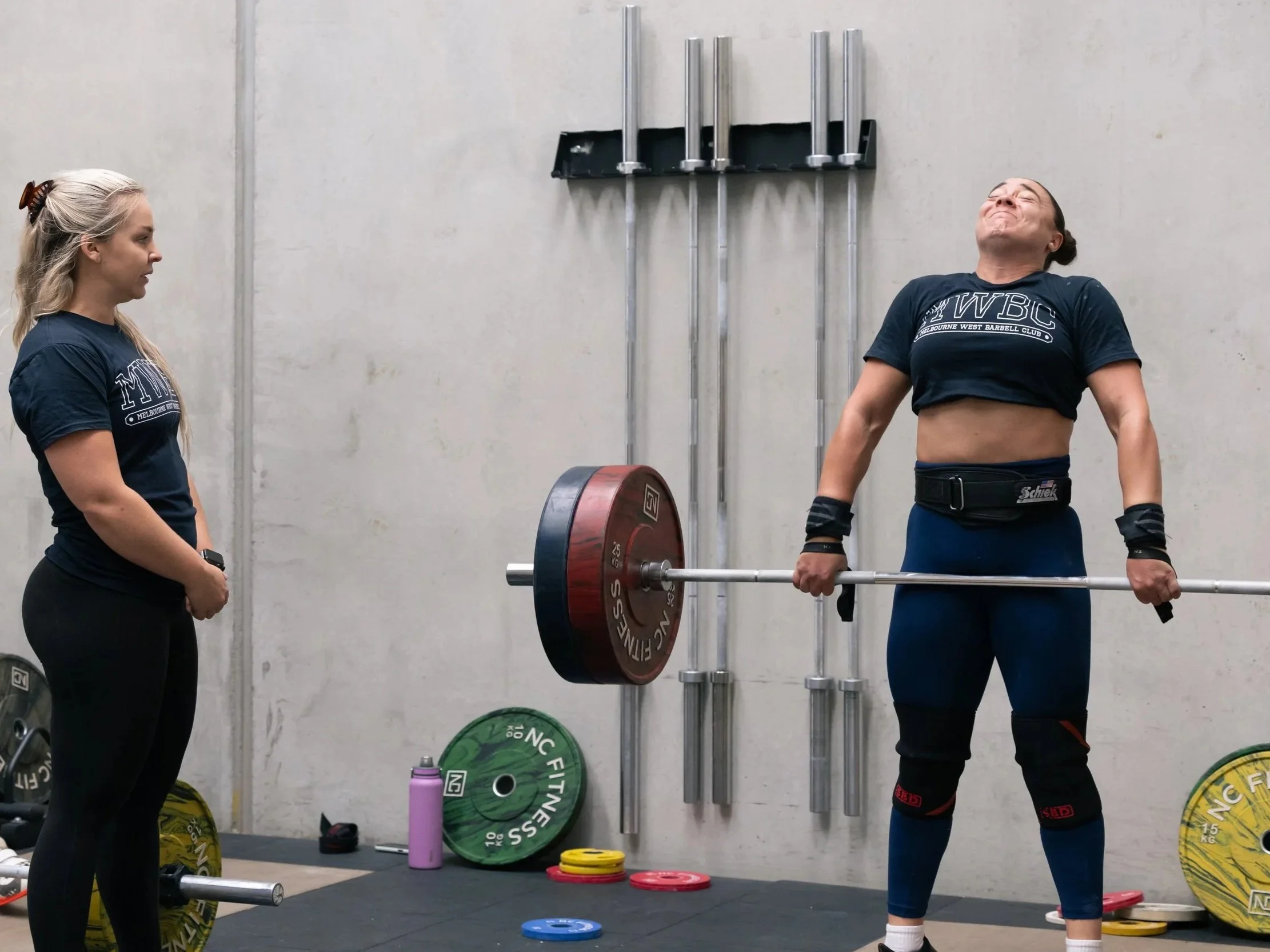
Okay, we need to talk about your progress..
So you’ve just started weightlifting - and you are comparing yourself to other lifters around you, getting caught up in chasing numbers, and thinking you’re not progressing if the bar isn’t getting heavier every week.
Well, I’m here to tell you, something you’ll never hear from one of your coaches is “you aren’t progressing fast enough”.
What we need to do is define what progress actually looks like when you’re learning to weightlift. To understand that yep, load increases are an indication of progress, but they need to be put into context to truly understand what progress looks like - and what we are trying to achieve - in the beginner stage of your weightlifting journey.
There are 2 key points I want to get across:
Progress is individual - Arbitrary timelines for achieving X, Y or Z aren’t a thing.... Everyone is different!
Progress does not only = increased load on the bar. Training adaptations, skill development, more muscle, and the quality of the work all contribute to longer-term outcomes.
So let’s delve into these key points more closely, to understand what your progress actually looks like:
Progress is individual
When you start weightlifting, progress will be relatively linear (we will talk more to this in Key point 2), but how quickly this comes, and how long this linear up ramp of progress continues is highly individual.
Weightlifting requires you to develop strength, speed, coordination & balance, mobility, body awareness & timing, and is very technically complex. That’s a lot of skills to develop simultaneously. And how quickly you progress, and in what areas, will often depend on your starting point or what you are naturally good at. Some people come into weightlifting with really strong foundations - maybe they have done strength training or powerlifting for years. Or really great conditioning because they’ve played team sports or done crossfit. Or really great mobility. Or great coordination. Or generally have great movement competency. Based on these attributes - You might get stronger before your technique catches up, or you might improve your technique without immediately seeing an increase in the load on the bar.
The progress you make in your first few months or years of training might look very different to the person on the platform beside you….and you won’t maintain the same rate of improvement forever, your progress will change as you become more proficient as a weightlifter.
And there are individual differences outside of this as well, that will affect what your progress looks like. Some people come into the sport at 24 years old, others at 44 or 64. Some have 10 hours a week available to train, others 3. Who you are, and the purpose of your training should ultimately help you determine what progress looks like.
Progress does not only = increased load on the bar
Getting stronger and lifting heavier weights are an important metric for weightlifting. BUT they aren’t the only ways to measure progress, particularly when you’re new to weightlifting & learning a new skill. Think about everything that goes into performing a snatch, clean, or jerk well.
You are making progress by:
Improving your technique. You’re understanding and feeling cues, or catching the bar in a more consistent position, or keeping it closer to your body.
Improving consistency. Each rep and each set is looking more and more similar, rather than it feeling really unpredictable.
Improving mobility. Depth in your squats is consistent, that position from the floor you used to struggle with? Totally cruisy now.
Building confidence. You’re becoming more comfortable getting under the bar, committing to the receive, or handling loads that previously intimidated you.
Developing strength and capacity. Your squats are getting stronger, your pulling strength is improving, and weights that once felt heavy are your warm up weights.
Improving your ability to train. Your sessions are getting harder and harder, but they feel easier, less tiring, you’re managing volume and load better, fatiguing less, and recovering well.
Learning to understand your body. You’re getting better at recognising when a lift feels right, identifying technical errors, and making adjustments based on feedback.
These are all meaningful adaptations that contribute to your development as a weightlifter.
If you are just beginning your weightlifting journey, you have an incredible amount of learning and development ahead of you. Your job isn’t to add load to the bar every single session - there is no universal timeline for how much you should be lifting after three months, six months, or one year of weightlifting. Your job is to keep learning, keep training, be patient with the process (you are progressing!), and keep having fun!
New to weightlifting, or thinking about starting?
Every athlete at Melbourne West Barbell Club is coached properly from day one, with a program written for their goals, their background and the time they have. Nobody here will tell you you’re not progressing fast enough. We’ll help you work out what progress looks like for you. (Book in here)
—MWBC Coaching Team
