
What to do when something starts hurting in training
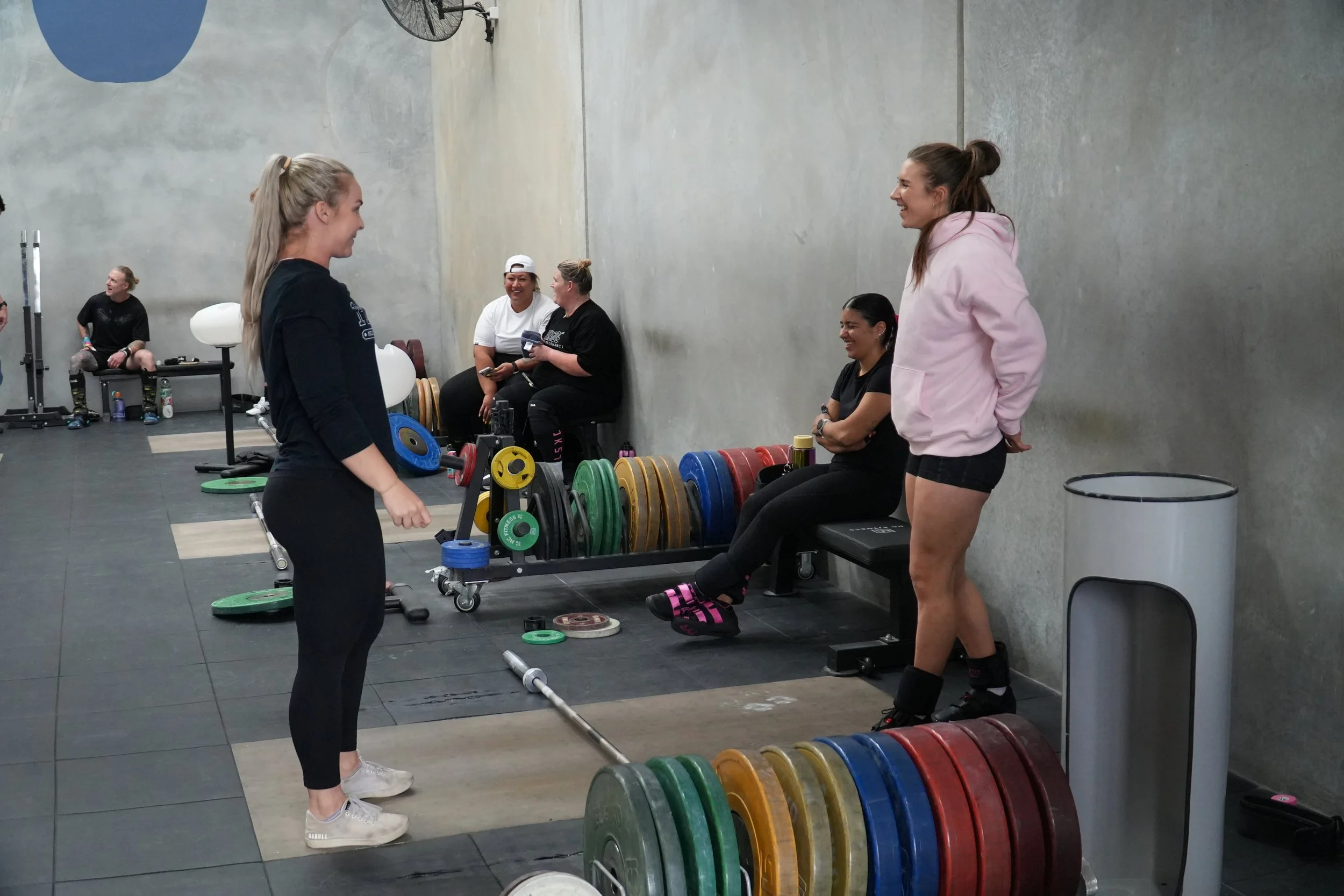
There's a moment I see on the gym floor at least once every few weeks.
Someone finishes their last set of front squats, racks the bar, and while they're stripping plates they mention that their wrist has been sore for about 3 weeks.
It comes out tentative, almost as an afterthought, like they're testing whether it's worth bringing up at all.
It's always worth bringing up! PLUS 3 weeks in it's a much bigger conversation than it would have been on day 2.
I've spent a long time on both sides of this, as an osteopath treating lifters and as a coach
next to the platform.
Most of the pain I see in weightlifters settles well when it's caught early and handled with a plan. What makes it drag on for months is usually how the first few weeks get handled: training through it and hoping, or stopping everything and hoping. So here's the plan.
What pain is telling you
Pain is your nervous system's read on how well your body is coping with what you're asking of it. The tissue is one input into that read.
Sleep, stress, how much you've eaten, how much your training has changed in the last fortnight, and what you believe the pain means all feed into it too. That's why the same knee can feel fine on a Monday after a good weekend and grumpy on a Thursday after 3 nights of bad sleep and a deadline at work.
In practice, most training pain in lifters comes down to load outpacing capacity. Something got asked to do more, more often, or in a new position, faster than it had time to adapt.
Tendons are especially sensitive to this. They respond well to consistent loading and get irritable with spikes, which is why a sudden jump in jerk volume before a comp, or a new block with 3 squat sessions a week, tends to show up at the elbow or the front of the knee about 2 weeks later.
How to decide what to do in the session
I use a simple rating with my athletes. Give the pain a number from 0 to 10, where 0 is nothing and 10 is the worst pain you can imagine. Then check 3 things:
During the session, it does not creep up to higher then a 5. The pain should also not climb by more then 2 pain points during your session.
It's back to your baseline by the next morning.
It's staying the same or easing from week to week.
If all 3 are true, keep training. You'll probably modify the session, and there's more on that below, but this is pain your body can work with, and loading it sensibly is usually part of how it settles.
If the number climbs past 5, if it changes the way you move, if it's worse the next morning, or if it's been creeping up over a couple of weeks, the load needs to come down and the plan needs to change. That conversation happens with your coach before your next session, ideally on the day.
Modify before you stop
A sore tendon or a grumpy back usually does best with a version of training it can tolerate, done consistently, while the irritation settles.
Full rest tends to leave it less ready for load when you come back and stiffer and more guarded.
There are plenty of ways to get there with the lifts:
Change the position. Lifting from blocks or the hang, or receiving in a power position, takes a lot of pressure off hips, knees and backs that are irritated in the bottom.
Change the load. Dropping to 60 to 70% for a week or 2 while keeping the movement in your programme often settles things faster than pulling the lift out completely.
Change the tempo. Slower lowering and pauses in squats and presses are usually well tolerated by tendons and keep your strength work moving.
Change the grip or stance. Small adjustments in the front rack or a slightly wider overhead grip can shift where the load is going.
Keep everything else going. A sore elbow still lets you squat, and a cranky knee still lets you pull and press.
Tell your coach, and be specific
The standard at MWBC is that you own your training, and that includes reporting what your body is doing. The more specific you are, the faster your coaches can do something useful with it. "My elbow's a bit sore" gives us very little to work with. "Inside of my right elbow, about a 4 out of 10, at lockout in the jerk, started after last Thursday's heavy singles" tells us the position, the load, the timeline, and usually the fix.
Timing matters as much as detail. A 2 out of 10 on day 2 is usually a small tweak to your programme. The same thing at 5 out of 10 in week 4 can mean pulling load out for a while, and nobody wants that a month out from a comp.
Look outside the gym as well
Before you blame your technique, look at the last 2 weeks of your life. Short sleep, a big week at work, eating less than usual, or a jump in training volume all lower what your body can tolerate, and pain is often the first place that shows up. Sometimes the most useful change to your snatch is going to bed an hour earlier and eating a proper lunch on training days.
When to get it looked at
Book in with a health professional if any of these sound familiar:
The pain hasn't improved after 2 weeks of sensible modification.
It keeps coming back to the same spot, block after block.
You have pins and needles, numbness or weakness, especially down an arm or leg.
There's significant swelling or bruising, or it started with a specific moment like a pop, a fall or a dropped bar.
It's waking you at night, or it's there at rest no matter what position you're in.
You're feeling generally unwell alongside it.
The last 4 need to be seen promptly. If you have back pain along with numbness around the groin or any change to bladder or bowel control, go to the emergency department straight away.
Most of the pain I see in lifters settles. The ones that drag on for 6 months almost always started as a 2 out of 10 that someone decided to keep to themselves.
I
f you want to have your moment or an injury assessed by me specifically, I still take on a small number of patients each month by referral only. Consider this your invite ;)
You can book at www.thebarbellosteo.com/online-booking
