
Why we don't max out every week (and you shouldn't either)
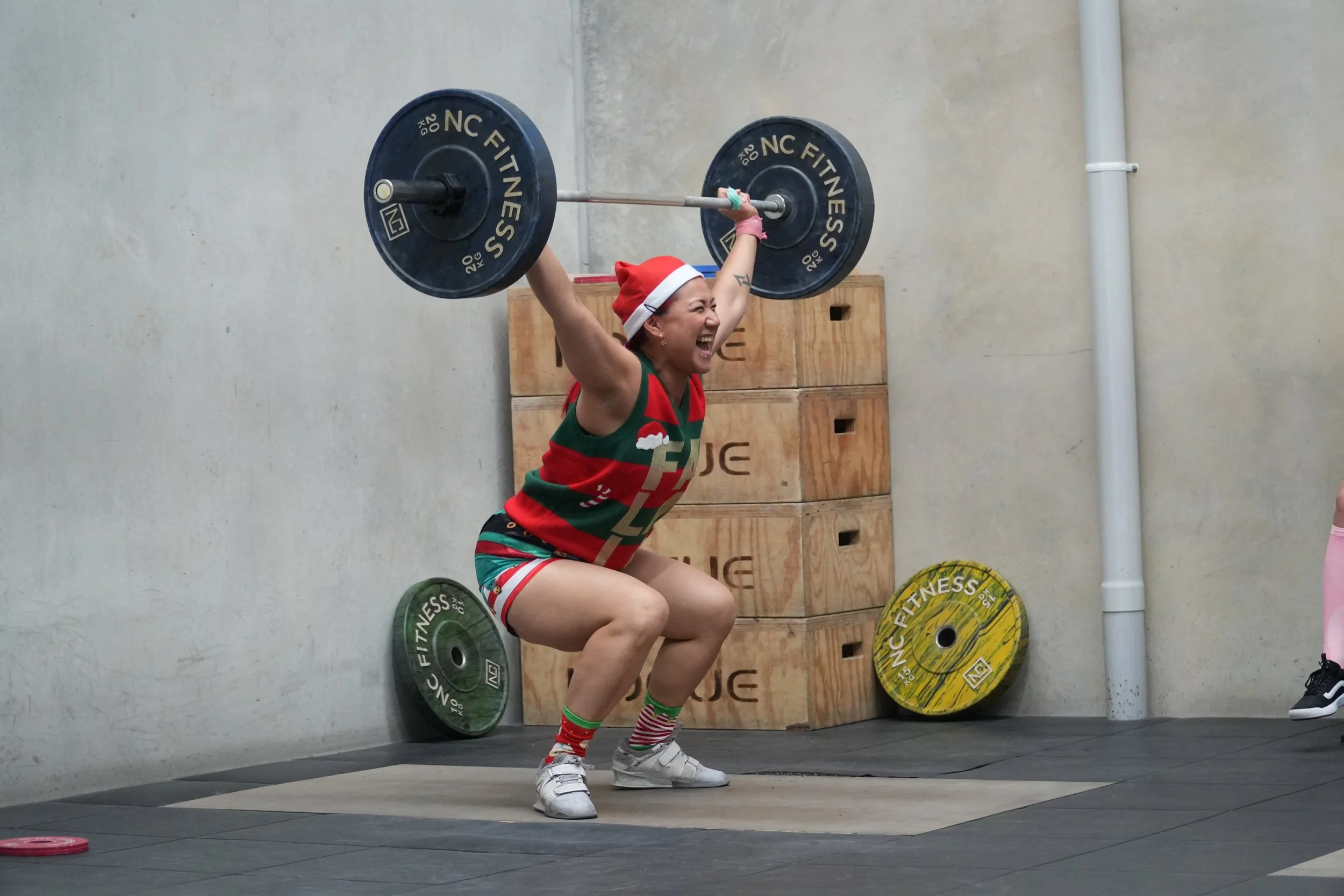
If maxing out is the fun part, why does it feel like your coach is always trying to hold you back?
Short answer: maxing out isn't training.
Building to a heavy single, hunting a new PB every week, going for broke every session, that's not the same as training to improve. And if that's all you're doing, you're not actually getting better. You're just testing where you're at, over and over again, and wondering why the number isn't moving.
Let's break down why.
A 1RM is a test, not training
Your 1RM is a data point. That's it. It's a snapshot that tells us whether the program is working and from there, we adjust.
It's the same reason you don't weigh yourself every hour, or do a body scan every Monday. The test gives us information. The training is what creates the change worth testing.
When you're constantly maxing out, you're skipping the part that actually drives progress and going straight to the scoreboard. And the scoreboard isn't going to move if you're not putting in the work behind it.
Going heavy every session is a recipe for burnout (and injury)
Beyond the fact that maxing out every week is a terrible way to manage fatigue, and a pretty solid way to get hurt, it leaves you no room to improve.
Here's what tends to happen:
You go in, you push hard, you maybe hit a PB. Cool. Then you do it again next week. And again. For a while, the numbers might keep climbing… but eventually, they stall. Now you're frustrated. Tired. Beat up. And you've got nothing to fall back on, because you never built the foundation underneath those PBs.
A few PBs early on can feel amazing. But you'll hit a wall, and when you do, you'll have to take 10 steps back just to start moving forward again.
A real example: the snatch that won't go up
Say you want to improve your snatch. You hit a PB last program, but you couldn't go heavier because you kept losing your position off the floor.
If you just keep going in trying to lift heavier, that position isn't going to fix itself. And for argument's sake, if you're losing position at your top-end weights, it's most likely a strength issue, not a technique issue.
So what actually moves the needle, for this specific example?
Snatch deadlifts and pulls at higher loads to build positional strength
Tempo or paused snatches to reinforce that position under control
Time spent at submaximal loads so you can actually own the positions you're trying to hit
That's training. That's what fixes the problem. And THAT'S what unlocks your next PB.
If you skip all of that and just keep grinding heavy singles, the position never gets stronger, the technique never gets sharper, and the PB never comes. You stay stuck, frustrated and confused about why you're not getting better.
The "max out every session" mindset usually points to something deeper
A lot of the lifters who want to max out every week are also the ones who struggle to stick to a program. They're chasing the quick fix. The next PR. The dopamine hit.
But here's the truth: the only real way to improve is to raise your own training standard.
That's not glamorous. It's not "send it" energy. It's:
Understanding what a good quality rep actually looks like (and what doesn't count)
Holding yourself accountable to the intention of every set
Trusting that the boring work IS the work
The lifters who progress the most aren't the ones constantly chasing PBs. They're the ones who know how to train with intention at 70%, 80%, 90%, so that when it IS time to test, the PB is already there waiting for them.
The trap most lifters fall into
A lot of people walk into the gym, max out early, grab a few quick PBs, and then get completely stuck. Why? Because the weights they're forced to work with at submaximal intensities are weights they can throw around like a rag doll, which makes it almost impossible to actually improve their movement quality.
You can't fix technique you don't have to think about. And if your "working weight" feels like nothing, you're not training the skill you're just rehearsing sloppy reps.
That's how lifters end up plateaued for months (or years), wondering why the program "isn't working" when really, the program never had a chance.
So what does training actually look like?
Training is the long game. It's spending weeks at moderate intensities, building positions, fixing weak points, dialling in technique, and progressively loading. It's hitting your prescribed percentages (to the best of your ability) with intent, not winging it based on how you feel.
Then, when test day comes (and it will), the PB is the result of the training. Not the goal of every session.
That's how you actually get stronger. That's how you stay healthy. And that's why your coach holds you back, not to limit you, but to make sure you've got somewhere to grow.
The bottom line
Maxing out is fun. We get it. We love it too.
But if you want to keep PR'ing for years, not just months, you've got to play the long game. Train with intention. Trust the program. Test when it's time to test.
The PBs will come. We promise.
Want help dialling in your training?
If you're stuck, plateaued, or just sick of guessing, we'd love to chat. Book a FREE 1:1 session with one of our coaches at MWBC. No pressure, no commitment, just a conversation about you, your training, and how we can help you get back to PR'ing.
