
How to Stay Consistent in Weightlifting Even When You're Not Feeling 100%
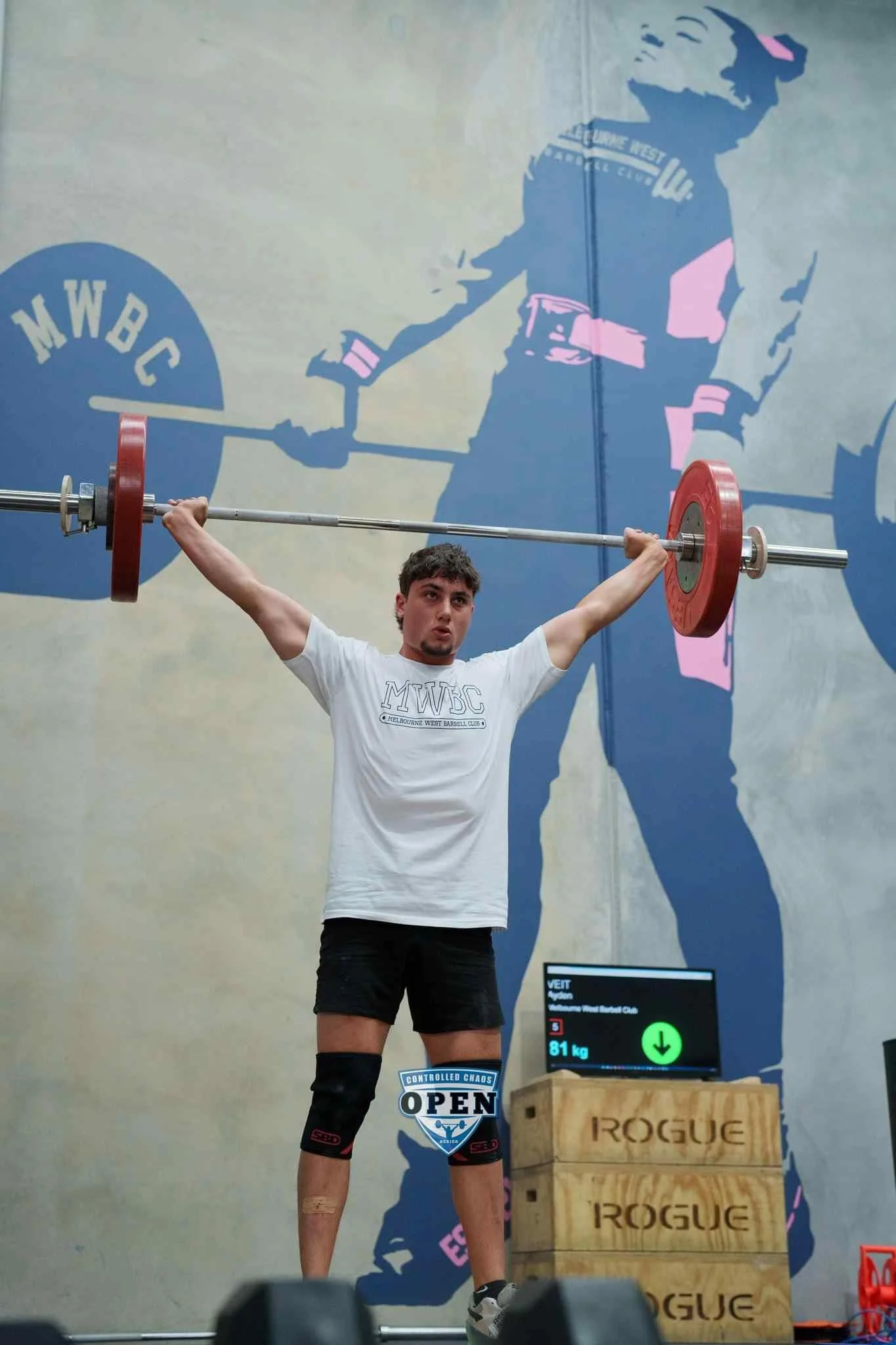
Training doesn't always go the way you want it to. And honestly?
Thank god, because if it did, this blog would just say "add weight every week, see you at nationals" and I'd be out of a job.
If you expect to add weight every single week, you're setting yourself up for frustration. And probably a bit of yelling at the bar, which, for the record, cannot hear you.
The idea that progress should be perfectly linear, week after week, is a nice story. But is it true?
Not really.
Sure, your program might be written to support steady load increases. Maybe you're following a linear progression model with planned weekly jumps. That structure does have a place, especially for beginners or during specific phases. But if you've been lifting for a while, you already know the truth: it doesn't always play out that cleanly. Nothing worth doing ever does.
Some days you're on fire, everything feels sharp, bar speed is up, and 90 percent moves like 70. You walk away from the session buzzing, probably telling anyone within earshot how good you feel.
Other days… the warm-up bar feels like a max attempt. You're missing lifts you should crush, and it feels like all your progress has vanished overnight. It sucks. And it messes with your head far more than it should for a bar that, on paper, you can lift in your sleep.
We're halfway through the year
Here's the thing about hitting the midpoint of the year: some of you have smashed goals you set back in January. Comp lifts, PBs, consistency streaks, whatever it was, you did the thing. Go you!
Others are still building. Still chipping away at the same goal you set six months ago, and maybe it feels slower than you'd like. That's not a failure, that's just what building actually looks like, it rarely looks impressive while you're in it.
And now we're heading into the part of the year where life gets loud again. Comps come up, work gets busy, winter makes the idea of leaving the house at 6am feel personally offensive. This is exactly the stretch where training either becomes a habit that holds, or a thing that quietly slips because "today's not a good day."
Here's the bit nobody tells you: staying consistent was never about always giving 100%. It's about still showing up when you can only give 60, because 60% done beats 100% skipped every single time. The lifters who are still standing at the end of the year aren't the ones who never had a bad week. They're the ones who adjust training when needed that allows them to keep coming to train.
Learning to read your own signals
One of the most valuable things you can learn as a lifter is how to auto-regulate. If you've got a coach watching you, they can help adjust on the fly, spot the flat bar speed before you do, and pull the plug before you grind yourself into the ground. But if you train solo, you need to learn to read the signs and make the call yourself.
How do you know when to push and when to pull back?
Start by tracking your daily readiness. This doesn't need to be complicated, and it definitely doesn't need a spreadsheet with seventeen tabs. A quick check-in before training can help. Look at:
Sleep quality
Nutrition (have you actually eaten enough, at the right times, or is your "lunch" just three coffees and vibes?)
Hydration
Stress levels
General energy and motivation
Logging this in your training journal, even with simple 1–5 ratings, can help you connect the dots over time. Why did one session feel great, and the next one, on the same day a week later, feel like hell? These are often the clues, hiding in plain sight.
Now, this isn't a green light to skip heavy days every time you feel a bit flat. But it does give you context. If you're showing up under-fuelled, dehydrated, sleep-deprived, and mentally fried, forcing yourself to grind out your top set might not be the move. You're not soft for adjusting, you're smart. As I like to say to my lifters “Live to train another day.”
How to adjust when things feel off
If your body is telling you today isn't the day, here are a few simple ways to modify without derailing your session:
Stick with your last warm-up set for all working sets
Drop the weight by 5 to 10 percent and focus on speed or technique
Reduce the number of working sets while maintaining intensity
Shift your focus to movement quality instead of load
Making small adjustments like these helps you stay consistent, respect how you feel that day, and still get something valuable out of the session. It's not giving up. It's coaching yourself, which is a skill in its own right.
One bad session doesn't mean you're going backwards
Let's be clear: one rough training day doesn't define your progress. Zoom out. Progress is built across weeks, months, and years, not from a single session where the bar felt like it was bolted to the floor. The goal is to leave more sessions feeling confident and capable, not constantly beaten down.
We're past the halfway mark now, which means the second half of the year is where consistency actually gets tested. Not in the big, dramatic PB moments, but in the quiet decision to still rock up when you're tired, busy, or just not feeling it. That's the part that actually builds the athlete.
Not sure when to push or pull back in training?
At MWBC, we don't just hand you a program and wish you luck.
We write individualised plans tailored to your goals, and we coach you through every step, especially the tough sessions, the flat days, and the ones where you'd rather be anywhere else.
We help you learn when to hold back, when to push harder, and when to throw the plan out the window and just send it.
If you want a program that adapts with you, and a coach who actually has your back, we're offering FREE one-on-one sessions. Reach out. Click the link here- LINK
—MWBC Coaching Team
