
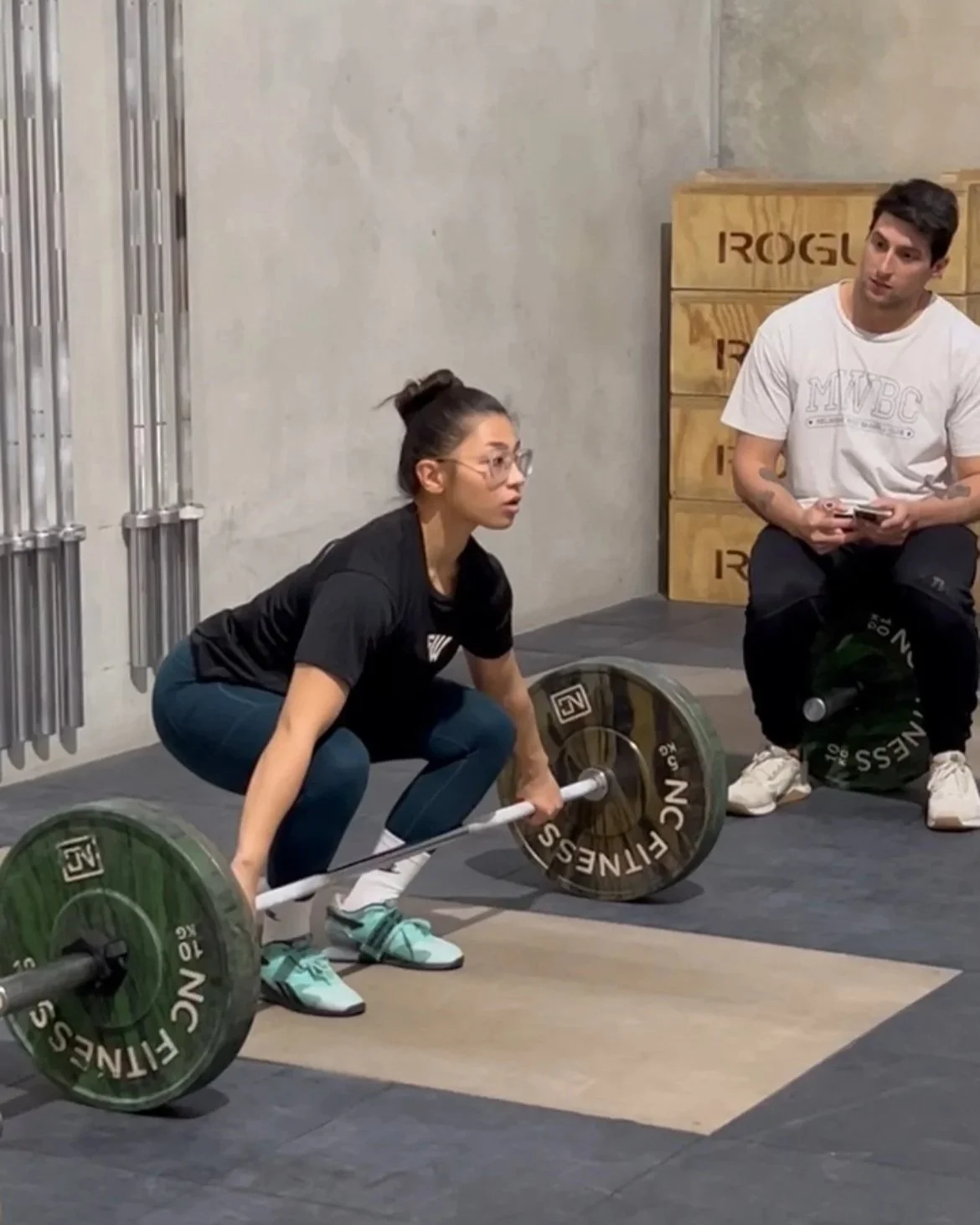
A healthy relationship with weightlifting means pursuing big numbers without making every snatch or clean and jerk a verdict on your worth.
If finding a way to balance your big ambitions and the rest of your life is challenging, don't stress because you're not the only one. It's often a strength of many athletes to be so dialled into their goals, that they can hyperfocus on only the pursuit. But, this strength can easily be a detriment when our whole identity and self-worth become wrapped up in weightlifting. Risking burnout, lack of identity outside of sport, and mental health challenges in the event of injury or transition out of sport.
Building your identity as an athlete outside of sport and developing a healthy attachment starts with giving other parts of your life room. I'm going to show you how you can start to shift the balance to making sure you're also allowing yourself to be human outside of weightlifting!
Step 1: Time audit-does your week match your values?
Before you try to think differently about lifting, map your actual week!
Take a page and draw a circle.
Split out your responsibilities and roles across the day (work or study, training, recovery, relationships, family, admin, sleep, downtime).
Now look at where the hours are really going: what takes the biggest share of your time and attention?
Check-in with yourself, does this split align with your values, or whether weightlifting has quietly become the centre of everything else.
If you want change, get specific about what you'd like to see shift more time for relationships, more rest, less scrolling, more fulfilling work and choose one small adjustment you can protect this week.
Be careful not to get too ambitious and make too many changes at once, the focus here is on aligning with your values and what feels right to you. So, take your time to add and subtract in a way that feels aligned to you!
Step 2: Reflect-What does your attachment to weightlifting look like?
A healthy attachment means weightlifting matters to you, but that it's not your only source of belonging, purpose, or self-respect. You can want a personal best, feel disappointed after a missed lift, and still recognise that your value hasn't changed. Broader interests, relationships, and values can help protect your well-being during setbacks and transitions.
For a competitive lifter, try expressing that balance through everyday decisions:
Follow the plan: Treat a scheduled lighter session as part of training, not something you have to compensate for.
Review lifts specifically: Replace statements of worth "I'm terrible" or "I can't do anything right" to factual statements like "I think I lost the bar forward" or I'm not sure what's going on there, I'll review the attempt with my coach".
Keep personal commitments: Protect time with people who care about more than your competition total.
Allow disappointment: You do not have to pretend a missed qualifying total or bombing out feels fine! It's completely normal to feel disappointed, let yourself feel it.
The goal isn't indifference. It's permission to care without turning the platform into a test of whether you deserve respect.
Step 3: Admit when you need help-When performance becomes your whole identity
Your identity as an athlete includes how strongly you see yourself through your sporting role. There's nothing wrong with being proud to call yourself a weightlifter, you should be proud! This sport is grindy and tests you in ways other sports couldn't.
The concern is when your athlete role leaves little space for any other part of you.
Use these prompts to examine your relationship with lifting not to diagnose yourself:
After missing a snatch, do I question the attempt or my worth?
Can I describe myself without mentioning lifting, rankings, or strength?
During a deload, do I feel disappointed, or convinced I no longer matter?
Do I hide worries because I think a serious lifter should handle everything alone?
Try to notice patterns rather than judging one difficult day. Bring repeated concerns into a conversation with someone you trust like your coach or a mental health professional.
Step 4: Rebuilding-How can you build an identity outside weightlifting?
Start by choosing roles, relationships, and interests that matter even when training is going badly. You don't need to shift into another demanding pursuit or an impressive second career. Identity development can begin with small commitments: being a reliable friend, learning something unrelated to lifting, or participating in your community.
Try this exercise alongside your weekly training plan:
Name three roles beyond lifter. Choose roles such as partner, sibling, friend, student, or volunteer.
Give one role an action every week. Arrange a call, attend a class, or help with a community activity.
Protect a realistic time slot. Choose something that fits around training and recovery rather than creating another exhausting obligation.
Notice what matters about it. Reflect on what you enjoyed, contributed, or learned (or didn't learn because we don't need to be improving on something!).
Give yourself the opportunity to not have to excel in something. You're allowed to enjoy cooking just for the enjoyment without tracking it or learn an instrument without competing.
Step 5: Keep your performance review separate from self-worth
Easier said than done, I completely understand. After your next tough session, experiment with a short review before replaying every mistake. Keep the language technical and specific (facts over feelings) and make sure you give yourself the opportunity to point out what you did well.
Post-session reflection:
What did I do well today?
What was hard for me?
What's one thing I'll try in the next session?
Step 6: Social media audit
Social media comparison can have a huge impact on your identity as an athlete. It's the place where people post their best selves, the highlights, and can easily make you feel like you're not doing enough or you're not in the right place.
I know this one can be hard, but you need to remind yourself: Social media is a highlight reel!! We maybe only ACTUALLY know 1-2% about the people we follow. AND, remember to question the information you're still getting about people... the influencer that you feel like you might know still set their tripod up to film themselves cry. We're hardly getting a real picture of people and their lives.
What to do about it:
Go through the people you follow on social media.
Does your following reflect your friends, family, interests beyond weightlifting?
Is there anything you want to follow but worry it'll take away your focus from sport? Give it a follow, maybe it will peak new interests!
Now think about what and when you post on social media. Do you share your misses as much as you share your wins? If not, how come?
Conclusion
Injury, deselection, and retirement deserve attention before they happen: the IOC identifies involuntary retirement, strong athletic identity, and limited retirement planning among factors associated with adjustment difficulties, which means that preparation is even more important than we might’ve previously thought. (doi.org)
So, try these steps and let the coaching team know how you go.
And remember that you can chase big goals AND live a fulfilling life at the same time!
A note about mental health* If anxiety, low mood, or concerns about training are affecting daily life, seek professional support rather than relying only on mental-performance exercises. (usopc.org) Reach out to a mental health professional or sports psychologist, Psychology Today is a great place to start to find a registered provider!
About the Author
Emma is an accredited mental health social worker supporting young athletes to enjoy their lives outside of their sport! If you’re looking for more content to support your mental health or improve your performance you can find more resources on the RYSE Wellbeing Blog!
