
My Biggest Lessons from Coaching Internationally
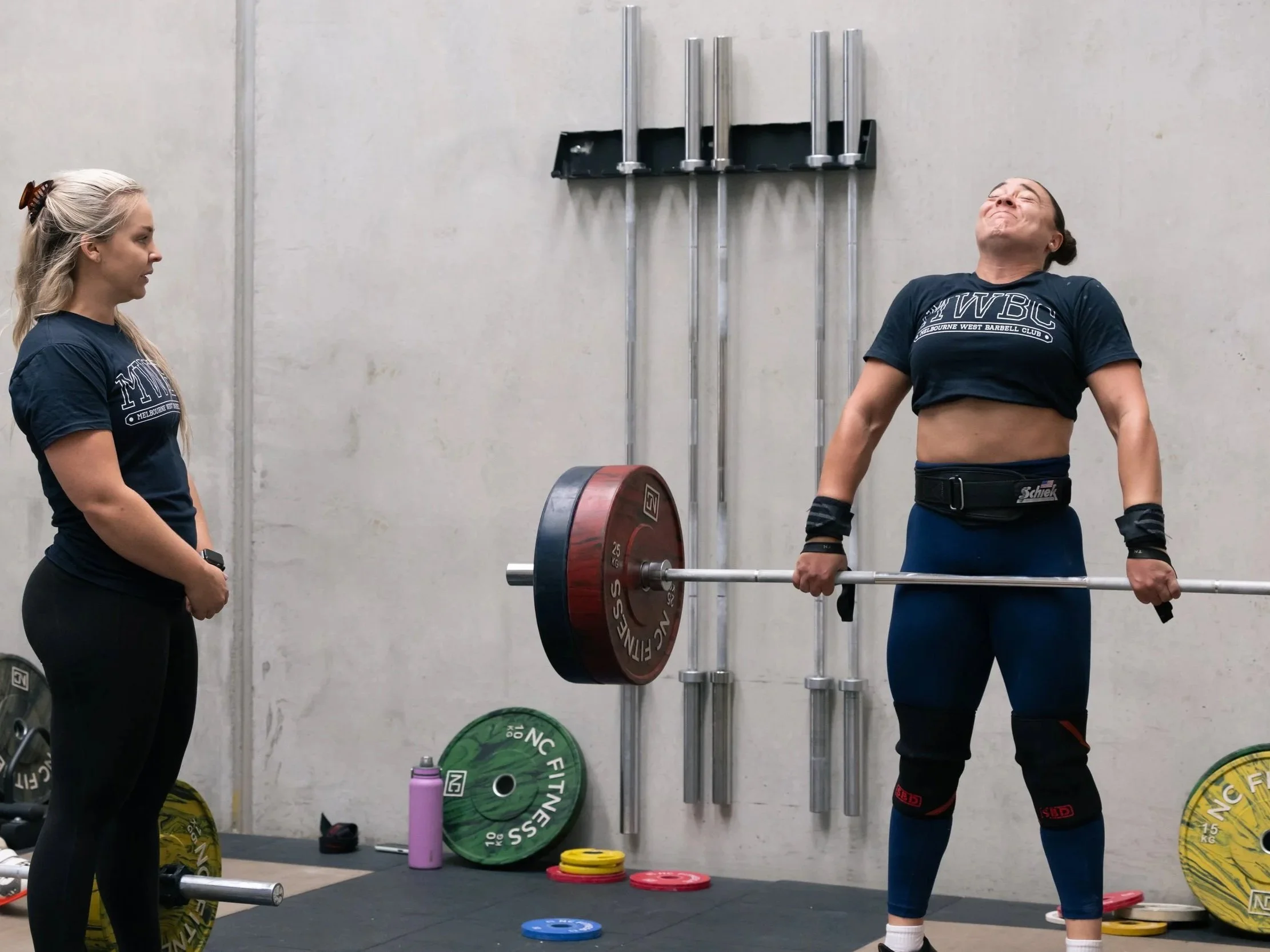
I've just come back from eight days in Samoa coaching at the Oceania, Commonwealth and Universal Cup.
Every time I get the privilege of representing Australia as coach I learn something I couldn't have learned anywhere else. Here's what I'm taking home from this one.
The preliminary entries never tell the whole story
The preliminary entry total is what athletes submit before the competition. It doesn't always reflect where they actually are in training, and in a sport decided by kilograms, that gap matters enormously.
Ash came into her session listed third out of four Australian lifters in her category. Her training total had grown well beyond what she had entered, and most people in that room had no idea.
What happened next is the reason I coach. She hit the top total for the 58kg class, effectively putting herself in the top spot for Commonwealth Games selection, in one of the most hectic sessions I've had to navigate as a coach. She ran her own race, held her nerve on her openers, and fought hard when it counted.
The number next to someone's name at the start of a competition is a starting point, not a ceiling.
Being a solo coach is a specific kind of pressure
For Ash's session I was coaching alone. No one to check my counting with, no one to bounce weight selections off, no one to reality check a call with in real time. Every decision landed on me, and I had to back each one the moment I made it, because there is no room in a warm up room for a coach who looks uncertain.
What carried me through was the preparation we had done long before competition day.
Knowing Ash deeply, trusting the game plan, understanding that playing it safe with weight selections is its own kind of risk. You either trust what you know or you don't, and the athlete feels whichever one it is.
Bombs happen. What comes next is the whole game.
Some of the most impressive coaching I watched in Samoa had nothing to do with winning. It was coaches managing athletes through a bomb out in the snatch and getting them back on the platform for the clean and jerk with their head still in it. Several athletes bombed the snatch and went on to take medals in the clean and jerk, and that doesn't happen without a coach who can hold the room after a miss and make sure the athlete knows the competition is not over.
Bombs happen when you're pushing big weights. What you do in the minutes after is where the real coaching lives.
Technical difficulties are part of the sport. Be prepared anyway.
Equipment fails. Timing systems malfunction. The warm up room runs differently to what you planned for. None of this is a surprise if you've coached at this level for any period of time. The coaches who handled disruption well this week were the ones who didn't need perfect conditions to stay calm, whose game plan had flexibility built into it from the start.
Preparation is about being steady enough that the unexpected doesn't throw you.
Your opening weight is a tactical decision
Going too heavy can kill momentum before the lifter finds theirs rhythm. Going too light carries its own risk, because athletes who are opened unexpectedly light can lose confidence before they've even properly started.
The opening weight sets the tone for the entire session and deserves as much thought as any other call you make on competition day.
The right word at the right time is the whole skill
Every athlete needs something different under pressure.
Some need information, some need quiet, some need you to name something specific, some need you to say nothing and just stand steady next to them. There is no formula for knowing which one it is.
You make a read in the moment and you back it, and that read comes from knowing your athlete, from every session and conversation and hard week between you. For me, five years of coaching Ash and understanding how she processes pressure is what made the difference in that session.
The coaches who were most effective this week weren't the loudest ones. They were the ones whose athletes trusted them enough to receive whatever was offered in the moment.
Some coaches are there for the win. Others are there for the athlete.
This was the clearest thing I observed across the whole competition. There are coaches invested in the result because the result reflects on them, and there are coaches invested in the athlete, which means staying committed to supporting them regardless of what the scoreboard says.
Our job is to do right by the athlete at all times, to the best of our ability.
Sometimes that means making a call that protects them from a risk they're willing to take but you're not prepared to endorse. Sometimes it means sitting with a result that hurts and making sure they don't carry it alone. The win matters. It's not the only reason we're there.
Samoa reminded me why I coach and why I built my gym around being able to coach weightlifting at this level for as long as possible.
This is the kind of coaching MWBC is built around. If you want to be coached by someone who's in your corner for the long haul, whether you're chasing a national total or just learning to snatch, we'd love to meet you. Book in for a FREE 1:1 Session
—MWBC Coaching Team
